Summary
Revolution on Wheels: The Robotaxi Showdown You Can’t Miss offers an in-depth look at the evolving robotaxi market and its implications for urban transportation. Directed by notable filmmakers including Jon Favreau and Peter Hoar, the series highlights the competition among major companies like Tesla, Waymo, and Zoox, all striving to deploy fully autonomous fleet services by the late 2020s. By focusing on the technological and regulatory challenges that impact this industry, the show serves as a lens through which viewers can gauge the feasibility and future of autonomous transportation.
The narrative reveals the struggles of major players navigating innovations and regulatory frameworks while balancing public trust and safety concerns. This exploration of “justified trust,” rooted in transparency and effective governance, raises critical questions for viewers about the implications of widespread robotaxi adoption. By showcasing pioneering technologies like VLA 2.0 and LiDAR, the series addresses the multifaceted efforts required to transition driverless ride-hailing into a mainstream service, fostering informed discussions about the future of urban mobility.
Background
The creation of Revolution on Wheels mirrors significant changes in the autonomous vehicle landscape, spurred by both technological advancements and regulatory hurdles. Over the past decade, the initial excitement around autonomous vehicles has met with challenges that prompted the establishment of a dedicated Robotaxi business unit in 2026. With pilot operations expected to start in late 2026, the ambition is to roll out fully autonomous services in megacities by early 2027, while external development contributions are encouraged through a newly released software development kit.
The show’s production actively engages with contemporary issues, filmed in locations such as Cardiff and Wilmington, aligning aesthetics and narratives with current societal and regulatory concerns. This effort aims to provide a balanced perspective on the complexities facing the robotaxi industry, encouraging viewers to consider both technical and human elements in these transformative developments.
Overview
The robotaxi sector is rapidly transforming urban mobility, thanks to advancements in autonomous technologies. Central to this evolution is the integration of sophisticated driving systems such as VLA 2.0, which support a wider ecosystem that includes innovations in various vehicle types. These changes are enhanced by data management systems like MDS feeds, which improve compliance and decision-making processes in city planning.
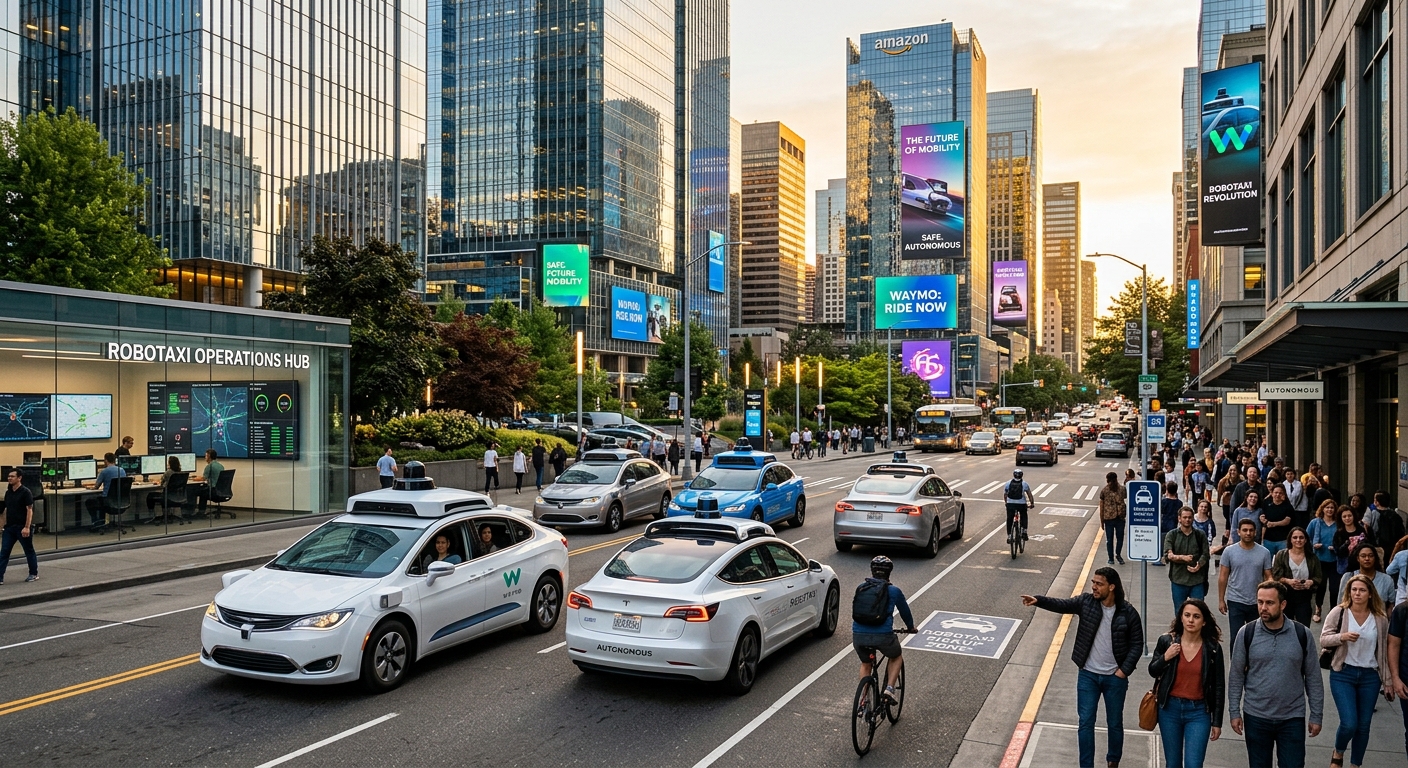
Major corporations are actively reshaping the competitive landscape; Uber is positioning itself to roll out extensive robotaxi services next decade through partnerships with companies like Volkswagen and Lucid. Meanwhile, Tesla is launching its new models aimed at scalable deployments, while Zoox expands its unique vehicle designs in markets like San Francisco. These diverse approaches signify a robust competition in the market, with safety and performance standards remaining a critical focus amid evolving regulations.
Technological Aspects
At their foundation, robotaxis are highly entrenched in advanced technologies that enable safe, autonomous transportation. Core to their functionality is sensor fusion, merging data from LiDAR, radar, cameras, and GPS to generate an accurate understanding of the environment. This technology underpins many automated features essential for navigating complex urban settings while striving to enhance safety standards through effective obstacle detection.
Complementing sensor capabilities, sophisticated artificial intelligence systems drive the decision-making processes in robotaxis. These learning algorithms enhance the vehicles’ abilities to classify surroundings, recognize patterns, and adapt to unpredictable traffic behaviors. The integration of advanced communication systems fosters improved operational coordination, ensuring efficiency and safety are managed at a large scale.
Manufacturers are also exploring diverse designs for robotaxis, from retrofitting existing electric vehicles to pioneering completely new structures like Zoox’s rectangular model. Such innovations highlight the range of strategies being adopted across the industry, setting the stage for differing user experiences and operational frameworks as these vehicles become commonplace.
Business Models and Market Strategies
The commercial viability of the robotaxi industry is taking shape, driven by falling sensor costs and investment shifts toward strategic deployment. Companies like Tesla are adopting vertically integrated models, where they control the production and software, setting ambitious targets for growth that are closely monitored by stakeholders. This approach emphasizes the importance of aligning technological capabilities with market demand.
In contrast, Zoox aims to revolutionize the passenger experience through unique designs, contrasting with traditional approaches that modify existing vehicles. This pioneering mindset is critical as the company expands its fleet through new market entries, pending regulatory clearance.
Collaboration is another vital aspect within the industry, illustrated by partnerships like Motional and Uber, which contribute to iterative learning through real-world data collection. Geographically, North America and China currently dominate the market, but overcoming regional operational challenges and regulatory compliance standards is essential for achieving success and scalability.
Regulatory and Safety Considerations
The regulatory landscape for autonomous vehicles varies greatly across states in the U.S., affecting testing protocols and operational requirements. States like California establish rigorous testing permits and performance monitoring while others, such as Nevada, permit fully autonomous vehicles on public roads. This inconsistency underscores the need for cohesive regulatory frameworks to ensure both safety and market growth.
Additionally, regulations for operational compliance and liability are evolving to encompass the unique challenges faced by autonomous fleets, such as traffic enforcement and incident reporting. Building public trust is paramount, as this relationship between regulation and societal perception will dictate the acceptance and success of robotaxi services moving forward. Companies are actively implementing rigorous safety standards to bolster public confidence, demonstrating the intertwined relationship between technological advancement and regulatory compliance.
Safety Record and Incident Reports
The obligation for robotaxi companies to report incidents reflects the industry’s commitment to safety, yet access to detailed safety data remains limited due to proprietary information protections. Investigations by regulatory bodies like the NHTSA highlight the need for greater transparency, especially in light of public concerns following high-profile incidents involving robotic fleets. The persistent challenges in obstacle detection reveal the complexities of deploying autonomous systems in populated areas and necessitate ongoing refinement in vehicle technology.
Episodes
The debut episode of Revolution on Wheels has set a high bar for the series, with engaging narratives shaped by the lived experiences of those within the industry. Subsequent episodes have continued to reflect current technological and regulatory advancements, thereby enhancing the impact of the storyline. The show thoughtfully integrates real-world regulatory frameworks into its narrative, showcasing the intertwined relationship between technology, society, and regulation in the realm of autonomous vehicles.
Reception
The show has garnered significant viewer interest, particularly in episodes featuring high-profile figures like Elon Musk, which has fueled online discussions surrounding public trust in robotaxi technologies. Critics acknowledge the show’s production quality, reinforced by its historical context and social themes, which resonate with ongoing industry debates. Such exploration of public trust in technology has sparked crucial conversations about ethics and responsibilities surrounding the growing influence of robotaxi services in our urban environments.
Impact and Influence
Revolution on Wheels has influenced perceptions and discussions within the autonomous vehicle sector, emphasizing the importance of transparent communication in addressing safety and regulatory challenges. By highlighting real-world complexities, the series navigates the evolving regulatory landscape while fostering a dialogue on operational challenges and public trust. Through its narrative, the show underscores the potential of robotaxis to reshape transportation while addressing the ethical considerations inherent in their widespread deployment.
Related Media
The evolving landscape of the robotaxi industry has been showcased across various platforms, highlighting investment opportunities and discussing technological challenges. Experts have produced insightful content focused on navigating the transition from research to practical deployment, stressing the significance of concrete milestones and partnerships. Recent instances of operational mishaps emphasize the hurdles that still exist for these technologies as they integrate into public spaces, while findings from Waymo and Tesla on remote assistance highlight the crucial role humans play in maintaining safety standards.
The content is provided by Sierra Knightley, 8 Minute Read