Summary
Recent research led by an international team from Hiroshima University reveals that skin damage may begin at the molecular level, specifically within collagen, well before visible signs appear. This hidden deterioration, linked to the loss of collagen’s supramolecular chirality, serves as an early warning for potential deterioration, making traditional imaging techniques inadequate for early detection. By employing innovative imaging methods that integrate different advanced spectroscopic techniques, researchers have discovered that these subtle changes in collagen structure provide crucial insights for skin health, suggesting a shift towards proactive care strategies rather than reactive treatments.
Importance of Early Detection
Recognizing early structural changes in collagen is vital for preventing irreversible skin damage. Traditional imaging mainly highlights visible signs, missing critical early alterations that indicate deteriorating skin health. The integration of sophisticated optical techniques allows for a comprehensive view of collagen’s molecular organization, highlighting a new dimension to skin assessment that prioritizes early intervention and personalized treatment plans tailored to individual risks.
Innovative Imaging Techniques
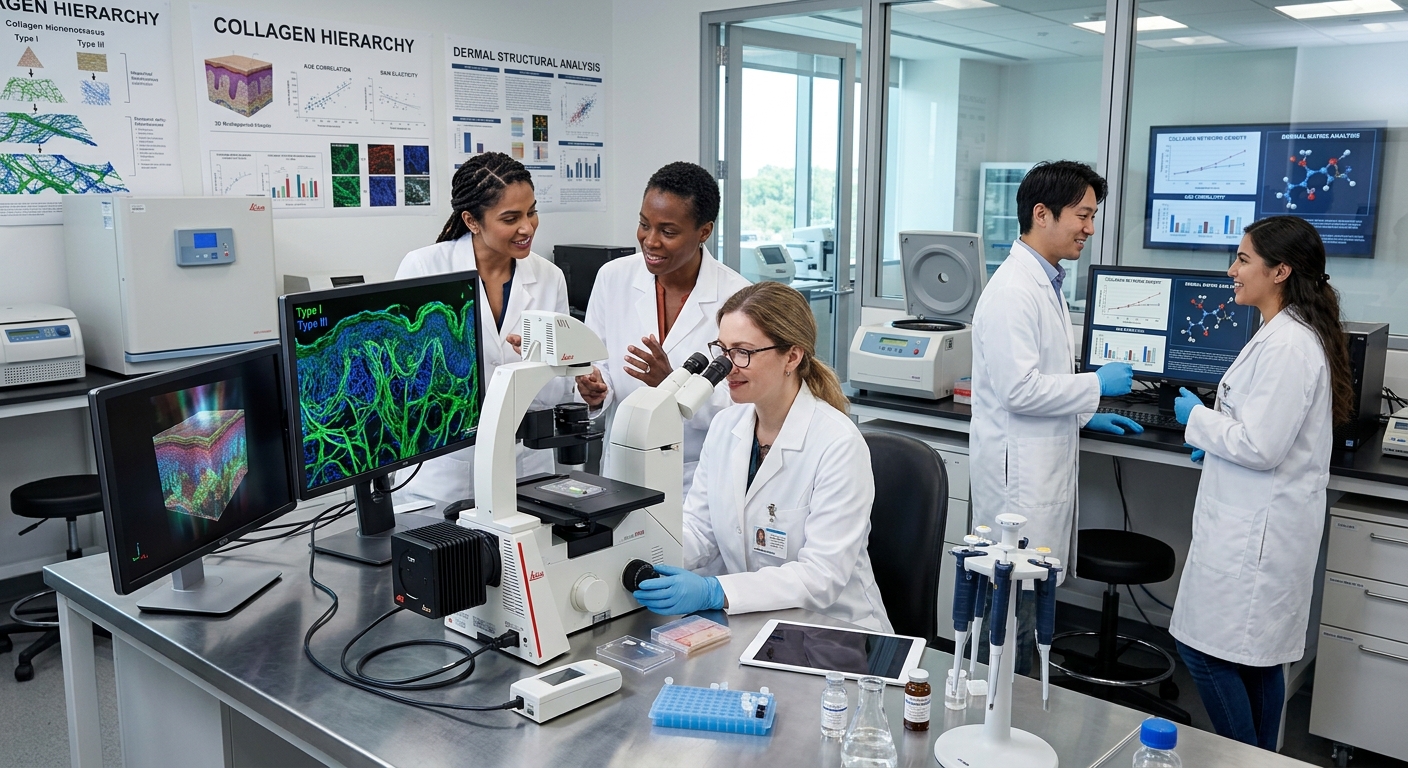
The use of advanced optical imaging, including synchrotron radiation vacuum-ultraviolet circular dichroism (SR-VUVCD) and multidimensional quantum cascade laser vibrational circular dichroism (MultiD-QCL-VCD), has been central to these discoveries. By evaluating how collagen’s molecular structure reacts to polarized light, these methods can identify alterations that standard imaging often overlooks. This innovative approach enables researchers to map both the presence of collagen and its functional integrity, yielding more sensitive indicators of tissue health that could lead to earlier assessments in clinical settings.
Clinical Implications
The implications of these findings extend to clinical practice, where understanding skin aging and subtler damage could enhance diagnostic precision. With the ability to detect tissue weakening before visible deterioration, healthcare providers can implement preventative measures, potentially improving patient outcomes. Moreover, AI-driven diagnostic tools have shown promise in skin cancer detection, currently enabling broader access to effective diagnostics while addressing biases in diagnostic accuracy across diverse skin types.
Future Directions in Research
Future research is likely to focus on refining imaging techniques and integrating them with molecular insights to enhance early diagnosis. This includes exploring the connections between collagen structure and tissue architecture to identify early signs of degradation. The anticipated synergy between advanced imaging and artificial intelligence holds potential for more accurate, equitable dermatological assessments and tailored treatment plans, signifying a transformative approach in skin health management.
The content is provided by Blake Sterling, 8 Minute Read