
Negotiation Summary
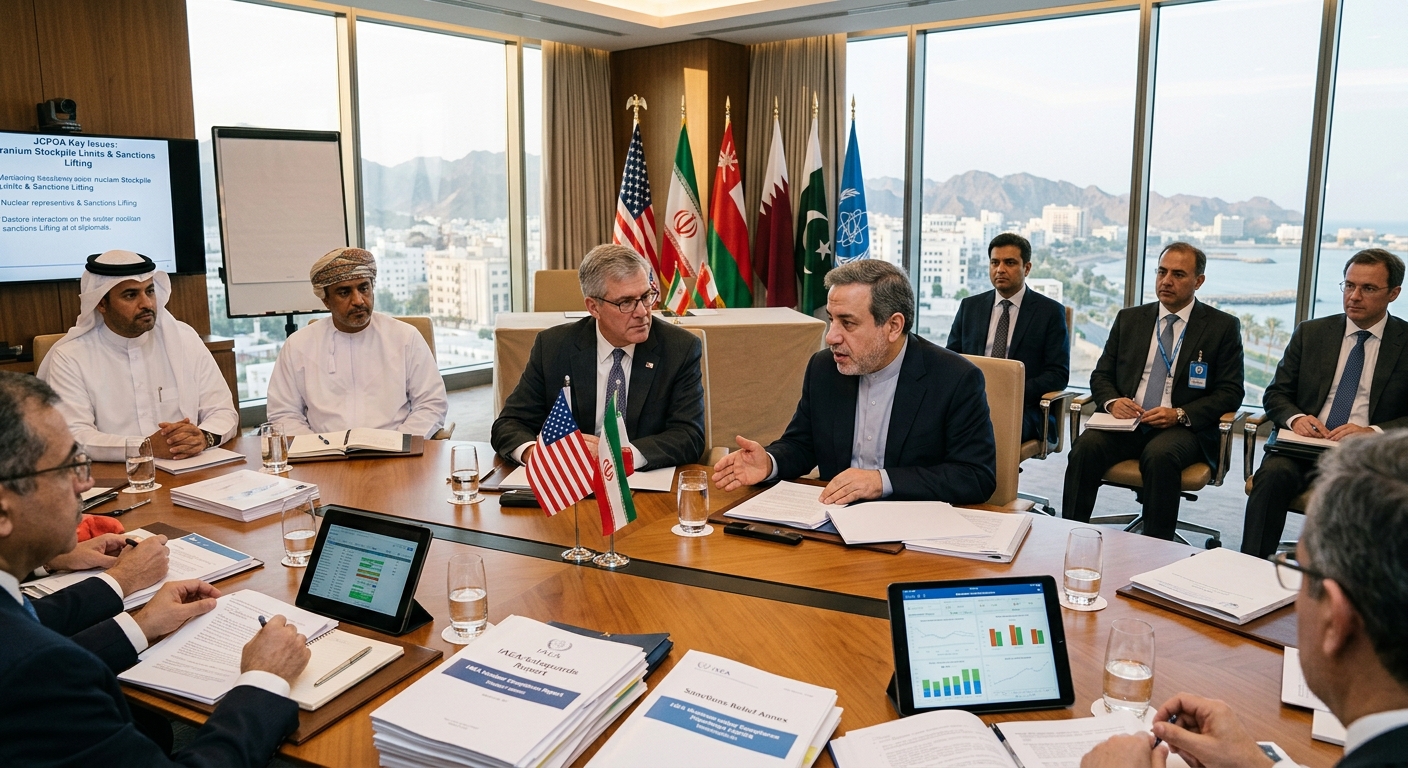
The recent US-Iran talks reflect a significant diplomatic effort to address long-standing tensions surrounding Iran’s nuclear program and regional security issues. Mediated by Oman, Qatar, and Pakistan, these discussions marked progress following years of strained relations after the US withdrawal from the 2015 Joint Comprehensive Plan of Action (JCPOA). Key figures, including US Special Envoy Steve Witkoff and Iranian Foreign Minister Abbas Araghchi, engaged in discussions, supported by the International Atomic Energy Agency (IAEA) for compliance verification. The negotiations centered on phased sanctions relief, management of enriched uranium, and de-escalation of conflicts, although they have met cautious optimism from regional actors concerned about security implications and Iran’s strategic leverage.
Historical Context
The relationship between the US and Iran is shaped by a complex history, notably marked by the 1953 coup that overthrew Iran’s Prime Minister, fostering deep-seated mistrust. The initiation of Iran’s nuclear program by the US in the same era laid the groundwork for subsequent negotiations, culminating in the JCPOA in 2015. However, the US withdrawal from the JCPOA in 2018 reignited tensions, placing the two nations in an intricate diplomatic situation, necessitating renewed dialogue through indirect negotiations mediated by neutral countries.
Structure of the Talks
The format of the US-Iran talks involved mediated discussions through third parties like Oman and Qatar, preserving separation between delegations to manage distrust. High-level meetings began in April 2025 and focused on procedural issues while fostering measurable phases of progress. Expert-level negotiations supported broader dialogue, addressing topics such as sanctions relief and nuclear compliance, all while establishing a structured timeline to facilitate ongoing discussions within a 60-day framework.
Core Issues Addressed
Central to the recent negotiations were critical issues such as Iran’s right to uranium enrichment and the conditions for sanctions relief. Iran insisted on tangible economic benefits before agreeing to restrictions, whereas previous US demands included dismantling Iran’s enrichment capabilities. The discussions also encompassed regional security, with attention to ceasefires and the reopening of vital waterways. These interrelated topics highlight the complexities involved in reaching a mutually beneficial agreement.
Outcomes and Implications
The negotiations resulted in a “performance-based” agreement, facilitating a ceasefire and establishing a foundation for future discussions. While the accord received praise internationally, particularly regarding the prevention of nuclear weapons development, concerns remain about the long-term effectiveness and compliance from Iran. Unresolved security issues could affect the agreement’s durability, emphasizing the need for robust verification measures and additional negotiations within the outlined timeframe.
Role of the IAEA
The IAEA has been instrumental in ensuring compliance and monitoring Iran’s nuclear activities throughout the negotiation process. Their involvement includes regular updates on verification efforts and recommendations for improved cooperation with Iranian authorities. As the talks continue, the IAEA’s oversight remains critical to maintaining transparency and confidence in Iran’s nuclear program.
Mediation Strategies
Mediators have adopted a comprehensive approach emphasizing confidence-building measures that address both parties’ core concerns. By focusing on the management of Iran’s uranium enrichment and the reopening of critical maritime routes, mediators aim to secure a lasting resolution. As regional dynamics evolve, the strategies employed also reflect an understanding of shifting diplomatic landscapes and the necessity for continued engagement to de-escalate tensions.
Influence of Historical Context
The US-Iran negotiations are profoundly influenced by historical events, particularly the legacy of the 1953 coup, which continues to foster mistrust. Past interventions and failures in negotiations impact current dynamics, highlighting the need for approaches that are sensitive to both parties’ historical grievances. Understanding this context is essential for recognizing the complexities and challenges in navigating future diplomatic engagements.
The content is provided by Jordan Fields, 8 Minute Read