Summary
In June 2026, India imposed a temporary ban on Telegram to address cheating linked to the National Eligibility cum Entrance Test (NEET) re-examination. Citing misuse of the platform for leaking question papers, the ban lasted from June 16 to June 22 and involved restricting app access and disabling the message-editing feature. The decision drew criticism for impacting millions of legitimate users and raised debates about government overreach and digital rights, compounded by the technical challenges of enforcing the ban due to Telegram’s encryption and proxy capabilities.
Telegram’s Role in India
Telegram has gained immense popularity in India, particularly among younger users, positioning itself as a prominent messaging tool alongside WhatsApp. The Indian government’s concerns centered on its use in facilitating exam fraud, prompting a temporary ban under Section 69A of the Information Technology Act. The measure intended to curtail cheating but highlighted tensions between regulating exam integrity and maintaining user rights, causing many users to depend on Virtual Private Networks (VPNs) to circumvent the ban.
Ban Implementation
Initiated by the National Testing Agency (NTA), the ban aimed to tackle organized cheating networks exploiting Telegram. Instructed to disable the message-editing feature, the ban’s enforcement faced criticism for its limited effectiveness, as users quickly turned to VPNs to maintain access. Legal disputes arose following the ban, illustrating the complex tension between preventing fraud and preserving free speech rights.
Immediate User Response
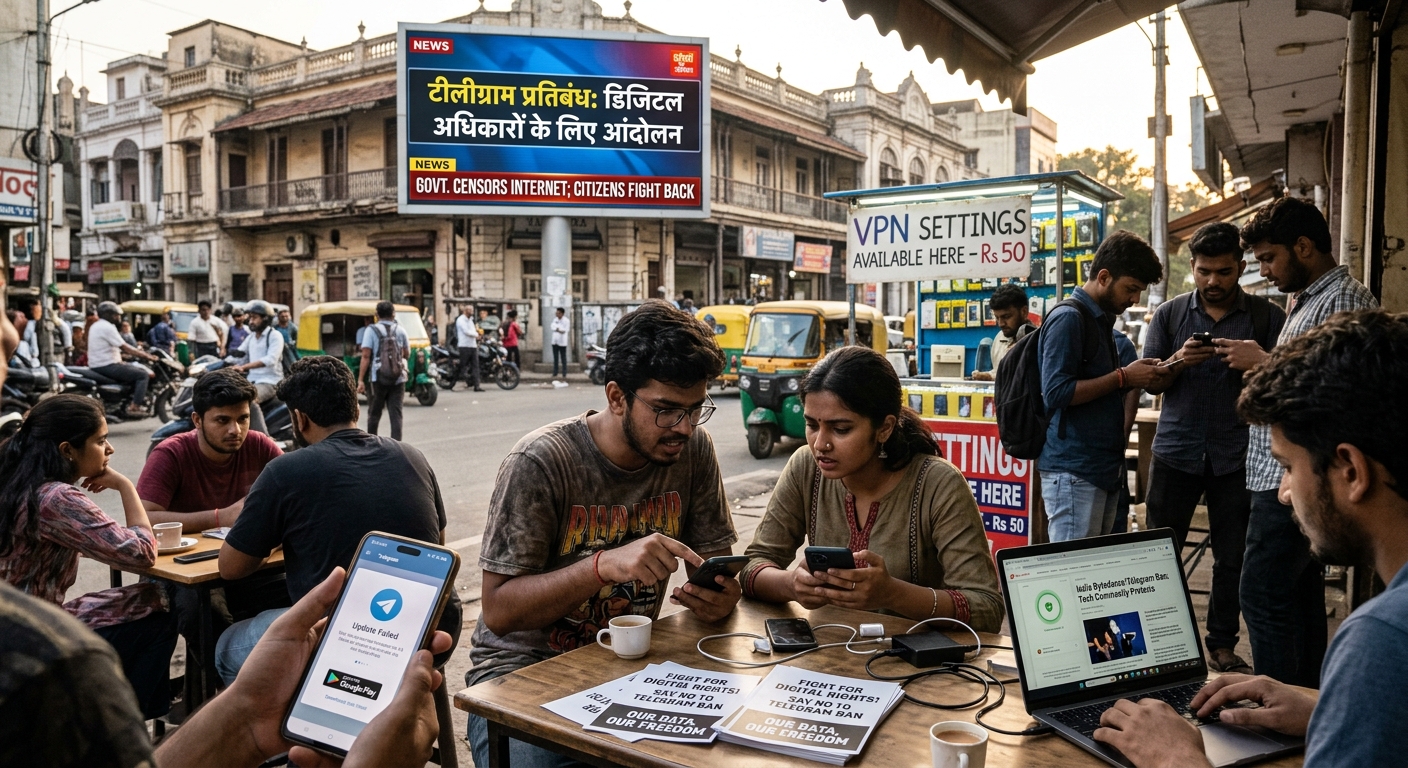
Upon the ban’s implementation, Telegram became inaccessible, resulting in a significant public response. Rather than abandoning the app, many users opted to download VPNs to maintain connectivity. This behavior indicated a proactive approach among users to find workarounds, reflecting broader trends in Internet censorship resistance within India.
Technical Aspects of Enforcement
India’s ban involved major telecom operators blocking Telegram through DNS-level interventions, but the platform’s unique architecture complicated these efforts. Telegram’s built-in proxy capabilities facilitated access despite the official ban, leading many users to utilize VPNs, which experienced a substantial increase in registrations and downloads. The challenges facing ISPs pointed to an inherently limited capacity for effective censorship.
User Demographics and Responses
The ban prompted a notable increase in VPN usage due to reliance on Telegram for educational and personal communication, particularly among students. The demographic shift highlighted a vulnerability in India’s censorship structure, with VPN services gaining prominence as critical tools for accessing information and maintaining privacy amid restrictions.
Public and Governmental Backlash
Mixed reactions followed the ban, with government agencies defending it as essential for academic integrity, while critics lamented its broader implications for digital freedoms. Concerns raised included the effectiveness of censorship and the imposition on the rights of normal users, as well as the ease with which restrictions could be bypassed using VPNs. Ongoing discussions in the Delhi High Court further exemplified the legal complexities surrounding internet regulations in India.
Global Context and Ongoing Developments
Internationally, Telegram has faced scrutiny similar to that witnessed in India, where governments contend with challenges posed by its use in illegal activities. The ongoing legal discussions and technical challenges reveal broader questions about government control versus user rights, highlighted by both national and international responses to internet censorship and digital freedom.
The content is provided by Sierra Knightley, 8 Minute Read