
Summary
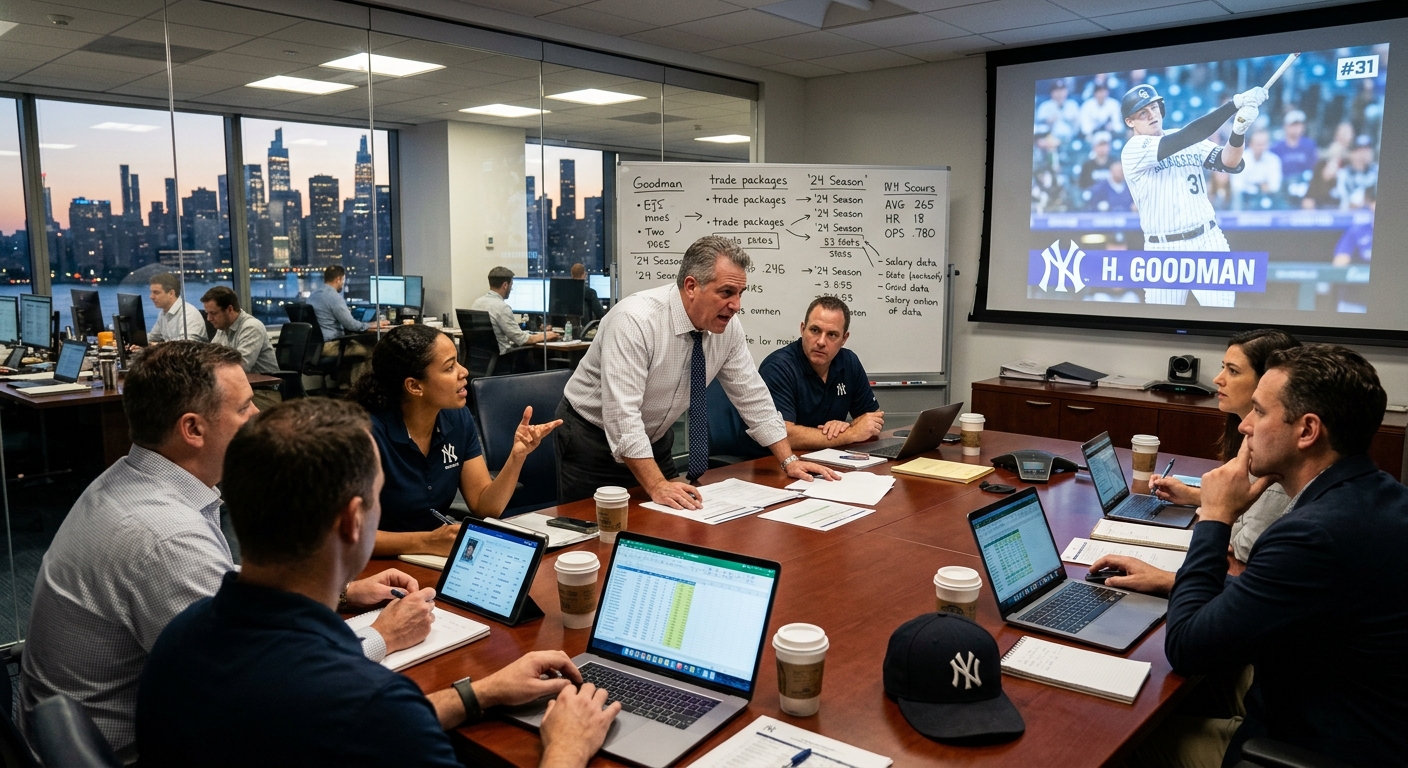
The New York Yankees are reportedly pursuing a trade to acquire Hunter Goodman, a 26-year-old power-hitting catcher from the Colorado Rockies, to address significant offensive struggles at the catcher position ahead of the 2026 trade deadline. The Yankees’ current catchers have collectively posted a historically low batting average of .526 this season, with their primary catcher, Austin Wells, underperforming offensively with just four home runs and a -0.2 bWAR over 57 games. Goodman, by contrast, has demonstrated notable power and consistency, slugging 26 home runs and maintaining an .865 OPS, making him one of the most attractive catching options available.
Goodman’s emergence as an All-Star and Silver Slugger recipient marks a significant milestone in the Rockies’ lineup, which has otherwise struggled with offensive consistency and power. Despite the Rockies’ ongoing rebuilding efforts and roster challenges, Goodman’s combination of offensive production and defensive skills positions him as a valuable asset and a potential cornerstone for the Rockies’ future. However, the Rockies are expected to demand a substantial trade package for Goodman, including top Yankees prospects, reflecting his status as one of their best players and the difficulty of acquiring such a high-impact talent.
The Yankees’ interest in Goodman highlights their urgent need to bolster their catching depth and overall offensive output as they aim to remain competitive in the 2026 season and beyond. Manager Aaron Boone and the front office recognize the importance of upgrading Wells’ position to transform the team into serious World Series contenders, a goal that may require significant investment and strategic risk. The potential trade has sparked considerable discussion among media analysts and fans, with opinions divided between the benefits of immediate offensive reinforcement and concerns over sacrificing promising young prospects.
This pursuit also underscores broader organizational trends in Major League Baseball, where teams like the Yankees and Rockies navigate the balance between rebuilding and contention through strategic roster management. The Rockies’ recent front office overhaul and the Yankees’ proactive approach to addressing roster weaknesses illustrate the evolving dynamics in team building amid competitive pressures. As the trade deadline approaches, the potential acquisition of Goodman represents a pivotal decision point with far-reaching implications for both franchises.
Background
The New York Yankees entered the 2026 season with significant struggles, particularly in the catching position, which has been a notable weak spot for the team. Their catchers have collectively posted a batting average of just .526 this season, marking the worst offensive production of any position on the roster. Austin Wells, the team’s primary catcher, has been a major disappointment, displaying a subpar offensive performance with a -0.2 bWAR in 57 games, hitting only four home runs, and maintaining a .488 OPS. This has effectively relegated Wells to a defensive-first role, an unforeseen development given his earlier promise.
Given these challenges, the Yankees are actively considering upgrading their catching options before the 2026 trade deadline. The pressing need for an improved presence behind the plate has been widely acknowledged within the organization and by analysts alike. One potential target is Hunter Goodman, the Colorado Rockies’ All-Star catcher who boasts an .865 OPS and has already slugged 26 home runs this season, presenting a stark contrast to the Yankees’ current catching woes. However, acquiring Goodman may prove difficult, as he is regarded as the Rockies’ best player and is expected to be highly protected by their front office.
The Rockies themselves are navigating their own roster challenges, focusing primarily on reshaping their team and improving pitching depth, while still grappling with offensive consistency and power. Despite these obstacles, Goodman’s strong offensive output has made him a standout figure and a prime candidate for a trade target by teams like the Yankees seeking to bolster their lineup.
Player Profile
Hunter Goodman is a 26-year-old catcher currently with the Colorado Rockies, standing 5’11” and weighing 220 pounds. He bats and throws right-handed. Goodman was drafted in the fourth round (109th overall) of the 2021 MLB Draft out of the University of Memphis. Since his major league debut on August 27, 2023, at age 23, Goodman has steadily established himself as a promising offensive and defensive presence behind the plate.
Goodman’s career trajectory highlights his combination of power and defensive skill. In the 2024 season, he emerged as a notable power hitter, accumulating 26 home runs, a significant milestone for a young catcher and a rare achievement within the Rockies organization. This performance earned him recognition as the first catcher in franchise history to win the National League Silver Slugger Award, in addition to All-Star honors and the Rockies Heart and Hustle Award, underscoring his impact both on and off the field.
Despite the Rockies’ ongoing challenges in sustaining a consistent offensive core, particularly with power and plate discipline, Goodman’s development offers a bright spot in their lineup. His ability to drive the ball and contribute defensively provides valuable versatility and leadership behind the plate. As the New York Yankees explore options to bolster their roster ahead of Austin Wells’ arrival, Goodman’s profile as a young, power-hitting catcher with proven major league experience makes him an attractive target.
2023 Season Performance
The 2023 season marked the debut of the Rockies’ promising slugger, who entered Major League Baseball at the age of 23 years and 323 days, becoming the 23,001st player in MLB history to debut. Throughout the season, he emerged as a key offensive contributor for Colorado, showcasing power and run-producing ability that stood out in the lineup.
Statistically, the player posted impressive hitting numbers, contributing significantly to the team’s offensive stats in categories such as home runs, hits, and batting average. With 26 home runs, he demonstrated the slugging prowess that the Rockies have been seeking for the future. Despite the individual success at the plate, the Rockies struggled overall, with the team’s main challenge remaining in starting pitching rather than hitting. The Rockies’ record at the 103-game mark was 38-65 (.369), slightly worse than the previous year, and the long-term effect of their trades and roster moves remains to be seen. Nonetheless, the slugger’s breakout season has made him a vital asset and a cornerstone for the Rockies’ offensive future.
Trade Considerations
The New York Yankees have been exploring options to strengthen their roster, particularly in the catching and offensive departments, as the team is currently experiencing a significant slump. One of the primary trade targets under consideration is a 26-year-old Silver Slugger from the Colorado Rockies, who has demonstrated impressive power-hitting capabilities with 56 home runs, 138 RBIs, and a 5.9 WAR over 222 games since the start of 2025. This player represents a considerable upgrade compared to current Yankees catcher Austin Wells, who has posted a -0.2 bWAR with just four homers and a .488 OPS in 57 games this season.
However, acquiring such a high-impact player would come at a steep cost. The Rockies would likely demand a substantial package in return, including top Yankees prospects such as Carlos Lagrange and George Lombard Jr., among possibly others. While the Rockies have little incentive to trade one of their premier hitters, a move involving the Yankees would make strategic sense if Colorado opts to reshape their roster further.
The Yankees’ front office appears willing to consider this costly transaction, viewing it as a necessary step to transform the team into serious World Series contenders not only for the 2026 season but for the subsequent years as well. With the current mix of veteran presence and emerging talent on the roster, including players like Jose Trevino and Austin Wells, the addition of a potent slugger from the Rockies could address one of the most pressing offensive issues facing the Yankees in the near term.
Impact on the Yankees
The New York Yankees are currently experiencing a significant offensive slump, particularly in the catching position, which has prompted the organization to seek reinforcements ahead of the trade deadline. Upgrading key roster spots, including the catcher role, is seen as crucial to reversing the team’s struggles and enhancing their competitiveness in the upcoming seasons.
Targeting a power-hitting catcher from the Colorado Rockies, who has demonstrated the ability to hit 26 home runs, could provide the Yankees with the offensive boost they desperately need behind the plate. This acquisition would not only address their immediate offensive deficiencies but also contribute to a more balanced and potent lineup capable of sustaining runs more effectively.
Manager Aaron Boone has expressed optimism about the current catchers, Jose Trevino and Austin Wells, but acknowledges that upgrading Wells, in particular, would be a significant move for the team’s future. Bringing in a slugger with proven power potential aligns with the Yankees’ broader strategy to build a roster capable of serious contention in the 2026 World Series and beyond.
Impact on the Rockies
The trade interest from the New York Yankees in acquiring a 26-homer slugger from the Colorado Rockies has highlighted ongoing struggles within the Rockies organization. The Rockies endured a difficult 2023 season, finishing with a franchise-worst 103 losses and a record of 40-63 at one point, including challenging stretches such as a 7-20 record in August and 10-19 across September and October. These results reflect broader issues within the team’s offense, which has been hampered by an overly aggressive approach at the plate and a persistent lack of power production. Although strikeout rates have shown some improvement, high chase rates continue to plague the Rockies’ offensive consistency.
General Manager Bill Schmidt’s decision to trade key players like Mike Moustakas, Pierce Johnson, and C.J. prior to the trade deadline underscores the team’s effort to recalibrate and build a more sustainable roster for the future. However, this has also left the Rockies potentially vulnerable to losing valuable offensive contributors, particularly as teams like the Yankees actively seek to bolster their own lineups by targeting Rockies players who could fill critical roles.
The loss of a power hitter to the Yankees not only impacts the Rockies’ offensive output but may also affect the team’s ability to maintain fan engagement and competitiveness in the coming seasons. As the Rockies look ahead, addressing their offensive challenges and reshaping their roster will be crucial to overcoming the setbacks experienced during the 2023 campaign.
Historical Context
The New York Yankees have a long history of strategic roster management, balancing high-profile acquisitions with talent development to maintain their competitive edge. Historically, many impactful players originated from trades with the Boston Red Sox, a strategy influenced by owner Harry Frazee’s financial decisions that saw key talents like Babe Ruth acquired from Boston. This era marked a shift towards a coherent acquisition and development program, especially under the guidance of General Manager Gene Michael and manager Buck Showalter, who emphasized building through the farm system rather than relying solely on expensive free-agent signings.
In more recent times, the Yankees have faced challenges that have necessitated roster improvements. Amid a difficult stretch in the current season, the team is actively seeking upgrades ahead of the trade deadline on August 3, targeting specific areas such as third base and catcher to strengthen the lineup. This proactive approach reflects the organization’s recognition of its needs and willingness to pursue strategic moves to enhance competitiveness.
Such moves echo broader trends in Major League Baseball, where teams like the Colorado Rockies, after historically poor seasons, have opted to overhaul their front office leadership and operational strategies rather than merely focusing on player transactions. The Rockies’ hiring of new executives such as Paul DePodesta and Josh Byrnes following a record-setting losing season illustrates how structural changes can be pivotal in rebuilding efforts. This context highlights the importance of organizational adaptability in complementing player acquisitions, a principle that the Yankees appear to embrace as they eye the Rockies’ 26-homer slugger to bolster their roster.
Additionally, roster management rules, such as the inclusion of players on the 60-day injured list within the 40-man roster count, affect team decisions and flexibility when making acquisitions or promoting players. These regulations factor into the Yankees’ considerations as they navigate their current roster challenges.
Media and Public Reaction
The potential trade involving the Yankees acquiring the Rockies’ 26-homer slugger has generated significant attention and mixed reactions among media analysts and fans. Many commentators view the move as a high-risk, high-reward strategy that could drastically improve the Yankees’ offensive lineup, especially given the underperformance of current player Austin Wells. Comparisons between Wells and the Rockies’ slugger highlight a stark contrast in production, with the latter seen as a massive upgrade despite the steep price in prospects that such a trade would require.
Analysts have pointed out that while the cost of acquiring the slugger might be considerable—potentially involving top prospects like Carlos Lagrange and George Lombard Jr.—the payoff could position the Yankees as serious World Series contenders for the 2026 season and beyond. This sentiment has been echoed in various sports media outlets, framing the trade as a transformative move for the franchise.
Public reaction has been cautious yet optimistic. Some fans express concern over the potential loss of promising young talent in exchange for immediate power hitting, while others support the front office’s aggressive approach to strengthening the roster. This mirrors past instances where unconventional strategies or bold acquisitions were met with skepticism initially but were later seen as necessary gambles to push the team forward.
The content is provided by Sierra Knightley, 8 Minute Read