
Summary
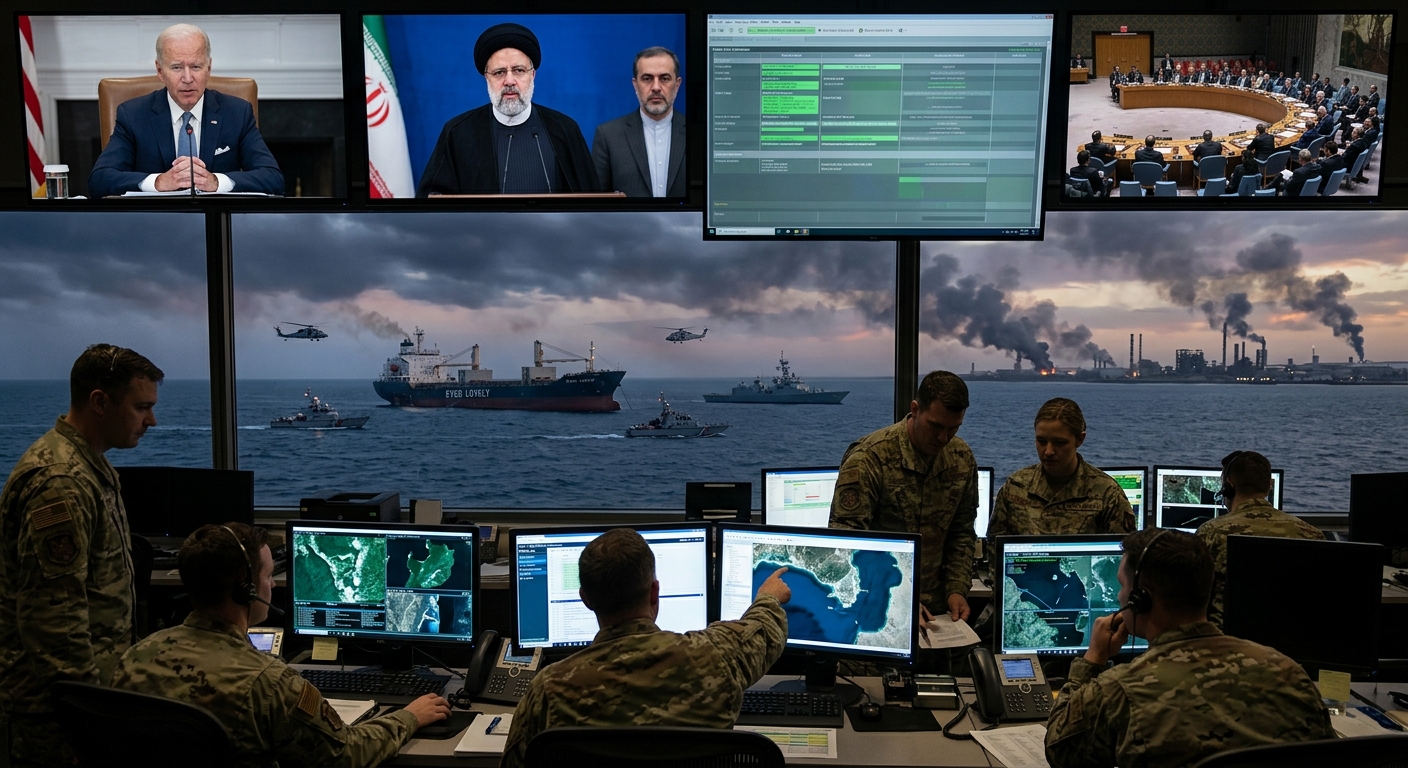
The US Strikes Iran in Retaliation for Cargo Ship Attack refers to a series of coordinated military operations conducted by the United States and Israel on February 28, 2026, targeting Iranian missile, drone, and radar facilities. These strikes were launched in response to a drone attack by Iran’s Islamic Revolutionary Guard Corps (IRGC) on the Singapore-flagged cargo ship Ever Lovely in the strategically critical Strait of Hormuz. The attack damaged the ship’s bridge but caused no casualties or environmental harm, escalating already high tensions in the region due to Iran’s increasing control over the waterway, a vital chokepoint for global oil transit.
The retaliatory strikes aimed to degrade Iran’s capability to threaten maritime traffic and were described by U.S. Central Command as a measured and precise response rather than an escalation into full-scale war. Satellite imagery confirmed significant damage at targeted sites in Tehran and along the Iranian coastline, including missile and drone storage facilities. However, key nuclear enrichment sites sustained damage without being destroyed, with assessments suggesting setbacks to Iran’s nuclear program by one to two years. The strikes occurred amid fragile diplomatic negotiations concerning Iran’s nuclear activities and regional security, introducing uncertainties into ongoing talks.
The military actions sparked widespread international debate regarding their legality and political implications. Critics contended that the U.S. strikes violated both domestic and international law by lacking explicit congressional authorization and failing to meet the threshold of imminent self-defense under the U.N. Charter. The operations drew condemnation from various countries, including Spain, which barred the use of its military bases for such actions, and prompted calls from over 100 international law experts to respect international humanitarian law and avoid further escalation. Domestically, the strikes intensified partisan divisions in the United States over war powers and executive authority.
Iran’s response to the strikes was defiant, with government officials pledging firm retaliation and launching missile and drone attacks against U.S., Israeli, and Gulf Cooperation Council (GCC) targets. The incident deepened internal political divides within Iran between hardliners opposed to any Western engagement and pragmatists seeking diplomatic solutions. Regionally, Gulf states expressed concern over escalating conflict and emphasized the need for transparency and restraint, underscoring the fragile balance of power in the Middle East and the ongoing risks to maritime security and global energy markets.
Background
Tensions in the Strait of Hormuz escalated significantly following an attack by Iran’s Islamic Revolutionary Guard Corps (IRGC) on a Singapore-flagged cargo ship. The drone strike damaged the ship’s bridge but resulted in no casualties or environmental impact. This incident heightened existing regional hostilities and concerns over the security of vital maritime routes used for international shipping.
The Strait of Hormuz is a critical chokepoint for global oil transit, and Iran has increasingly asserted control over the area, challenging both regional neighbors and the United States despite a recently reached interim deal with the U.S. The attack occurred concurrently with a United Nations maritime agency’s efforts to clear stranded vessels from the strait by rerouting them along the shores of Oman, bypassing the more hazardous central passage.
In response to the cargo ship attack and to degrade Iran’s ability to threaten maritime traffic, the United States and Israel launched coordinated military strikes on February 28, 2026. These strikes targeted multiple locations in Tehran, including sites where senior Iranian military and regime officials had convened. Satellite imagery confirmed extensive damage at the compound of a high-ranking Iranian figure, emphasizing the precision and scale of the operation.
Iranian political dynamics also played a role in the unfolding crisis. Prominent figures such as Mohammad Bagher Ghalibaf, a pragmatic conservative and former IRGC commander turned parliament speaker, received public backing from commanders like Qassem Soleimani Qaani amid internal disputes over negotiations with the U.S. This highlighted divisions within the Iranian establishment regarding engagement with Western powers.
The regional fallout from the strikes was immediate, with Gulf states—including Saudi Arabia, the UAE, Kuwait, Oman, Qatar, and Bahrain—condemning Iran’s retaliatory actions. Meanwhile, Spain criticized both Iran and the U.S.-Israel coalition, accusing them of violating international law. The situation rapidly escalated into a broader regional conflict with uncertain outcomes.
Details of the Cargo Ship Attack
On Thursday, a Singapore-flagged cargo ship named Ever Lovely was struck by a drone while leaving the Strait of Hormuz. U.S. officials attributed the attack to Iran’s Islamic Revolutionary Guard Corps (IRGC). The drone reportedly hit the starboard side of the ship, damaging the bridge and causing damage to the bridge windows, but no casualties or injuries were reported by the ship’s master or owner company, Evergreen Marine. The cargo onboard was also reported to be safe.
The attack occurred as a United Nations maritime agency was initiating an operation to move stranded ships out of the Strait of Hormuz by using an alternative route closer to the shores of Oman rather than the central part of the strait. This routing adjustment was part of ongoing efforts to enhance maritime safety amid rising tensions in the region.
The UK Maritime Trade Operations Centre confirmed the incident, describing the damage and noting that there was no environmental impact. However, it was not immediately clear under what conditions or authority the Ever Lovely sought to exit the Strait of Hormuz. Iran’s Persian Gulf Strait Authority subsequently issued a statement warning that any passage through routes outside those designated by the authority would not be covered by safe passage guarantees, insurance coverage, or related liabilities.
The attack was part of a broader pattern of escalating confrontations in the region. U.S. Central Command stated that the strikes on Iranian targets were in retaliation for the drone attack on the commercial vessel. The incident exacerbated tensions between the United States and Iran, occurring amid a backdrop of tit-for-tat strikes and ongoing military operations affecting the Gulf Cooperation Council countries and beyond.
The United States reported intercepting multiple other Iranian drones launched during the same period, with former President Donald Trump publicly highlighting the use of several one-way attack drones by Iran, one of which successfully hit the cargo ship. Iran, in turn, claimed the attack was a response to previous U.S. military actions and asserted its control over the Strait of Hormuz, emphasizing adherence to its rules for passage through the waterway.
US Retaliatory Strikes
In response to the attack on the Singapore-flagged cargo ship, the United States conducted a series of military strikes targeting Iranian missile and drone facilities as well as coastal radar sites along Iran’s coastline and on Qeshm Island. The U.S. Central Command described these strikes as “a powerful response” to Iran’s aggression, emphasizing that the attacks were retaliatory measures rather than an escalation into full-scale war. The strikes aimed to degrade Iran’s capabilities used to threaten maritime traffic in the strategic waterway.
The military action followed Iran’s IRGC attack on the commercial vessel, which caused damage to the ship’s bridge but no casualties or environmental impact. The strikes were limited in scope and carefully targeted, focusing on missile and drone storage locations believed to be involved in the attack on commercial shipping. U.S. officials underscored that these operations did not signal a resumption of broader combat but served as a punitive response to Iran’s violation of a ceasefire agreement.
The aftermath of the strikes saw significant damage to Iranian infrastructure, including missile and drone facilities, but assessments indicated that key nuclear sites such as Natanz, Fordow, and Esfahan, while seriously damaged, were not destroyed. According to the Defense Intelligence Agency (DIA), the strikes set back Iran’s nuclear program by one to two years, with some military officials estimating closer to the longer timeframe. Satellite imagery revealed bomb entry points and ash-covered areas at the Fordow site, reinforcing the assessment of severe damage.
These strikes generated widespread international reactions. United Nations Secretary-General António Guterres and various countries condemned the U.S.–Israeli strikes, while the UN Security Council passed a resolution condemning Iran’s retaliatory actions against Gulf states. Critics, including legal and international relations experts, argued that the U.S. strikes violated international law, constituted acts of imperialism, and infringed upon Iran’s sovereignty.
Domestically, the strikes raised questions regarding the legality of unilateral military action by the executive branch without congressional authorization. The operations were conducted without an explicit declaration of war or congressional approval, and the Trump administration did not cite existing Authorizations for the Use of Military Force (AUMFs) as justification. Scholars and policymakers noted the recurring pattern of U.S. presidents ordering military force abroad without congressional consent, a practice that remains controversial under the War Powers Resolution of 1973.
The Gulf Cooperation Council (GCC), comprising Bahrain, Oman, Saudi Arabia, Qatar, Kuwait, and the United Arab Emirates, expressed concerns during ongoing negotiations between the U.S. and Iran aimed at resolving the conflict and addressing Iran’s nuclear program. The strikes introduced uncertainties into these diplomatic efforts, with questions about their potential impact on talks scheduled to continue over the following months.
Legal and Political Analysis
The legality of the U.S. strikes against Iran has been subject to significant debate among legal scholars, policymakers, and international observers. From a domestic perspective, the U.S. Constitution grants Congress the sole authority to declare war, yet the June 21 strikes were conducted without congressional authorization or invocation of existing statutory bases such as the 2001 or 2002 Authorizations for the Use of Military Force (AUMFs). The executive branch has maintained that the strikes fall within its constitutional prerogative as commander-in-chief and have cited extant Office of Legal Counsel (OLC) opinions to justify unilateral uses of force, including self-defense and protection of national interests. However, critics argue that the War Powers Resolution—which requires the president to notify Congress within 48 hours of deploying forces and limits the duration of such operations without congressional approval—has been effectively circumvented. Congressional reactions have been mixed: some Democrats have pushed for war powers resolutions to curtail the military action and require termination within 30 days, while Republican leaders generally support the executive’s authority, resulting in a partisan divide over the strikes.
On the international front, the strikes have raised serious questions about compliance with international law, particularly the U.N. Charter’s prohibition on the use of force except in cases of self-defense or with Security Council authorization. Since Iran did not launch an attack against the U.S. or Israel prior to the strikes, many experts contend that the operations constitute a violation of international law and may amount to a crime of aggression. The failure to demonstrate an imminent threat undermines the justification for self-defense and challenges the legitimacy of the strikes under customary international law and treaty obligations. Unlike domestic law, violations of international law lack standardized sanctions and rely heavily on global norms and collective condemnation. Spain’s unequivocal denunciation of both the initial strikes and Iran’s retaliatory actions, alongside its decision to bar use of its military bases, has been cited as an exemplary response that other nations might emulate. Nonetheless, despite widespread recognition of the fragility of the international legal framework, the imposition of sanctions on the U.S. and Israel appears unlikely, partly due to Iran’s isolated standing and association with armed groups in the Middle East.
Politically, the strikes have exacerbated tensions within the U.S. government and among the public. Some national security analysts have questioned the humanitarian rationale offered by the administration, noting that domestic policies undercutting moral authority weaken the case for military action abroad. Meanwhile, the conflict has intensified partisan divisions in Congress, with ongoing debates about the balance of war powers between the executive and legislative branches and the broader implications for U.S. foreign policy. The situation underscores the complex interplay between legal justifications, political considerations, and international norms in modern military engagements.
International Reactions
The U.S. and Israeli military strikes on Iran in February 2026, conducted in retaliation for an attack on a cargo ship transiting the Strait of Hormuz, elicited a wide range of international responses reflecting geopolitical tensions and legal concerns. Several regional actors, including Qatar and the Gulf Cooperation Council (GCC) member states—Bahrain, Oman, Saudi Arabia, Qatar, Kuwait, and the United Arab Emirates—expressed deep apprehension over the potential escalation of conflict in the Middle East. These states emphasized the need to be kept informed throughout ongoing negotiations between the U.S. and Iran, highlighting their interest in a diplomatic resolution to the crisis.
China and Russia officially condemned the U.S. strikes and have engaged with high-level Iranian officials, urging peace and restraint. However, neither country has taken concrete steps to provide military or significant economic support to Iran in response to the strikes. This restraint has led to speculation about the durability and cohesion of the so-called “Axis of Autocracies,” with some analysts questioning whether China and Russia will deepen their involvement or maintain a more cautious posture.
From a legal standpoint, the strikes sparked debate regarding their conformity with international law. While some justify the military action as self-defense or collective self-defense under exceptions to the U.N. Charter—citing Iran’s nuclear program as a perceived imminent threat and Iran’s violations of U.N. Security Council resolutions—others contend that the attacks violated international norms. Over 100 international law experts signed a letter condemning the strikes, emphasizing the fragile nature of the international legal framework and calling for respect for international humanitarian law, including the Geneva Conventions. They expressed concern over the risk of atrocities and civilian harm in the region, urging all parties, especially the United States, to adhere strictly to legal obligations.
Iran reacted strongly to the strikes, with Foreign Minister Abbas Araghchi framing the attacks as a “test of our determination” and pledging a firm military response against U.S. and allied targets. In retaliation, Iranian forces launched missile and drone attacks against U.S. troops stationed across the Middle East, as well as against Israel and GCC member states. While many of these retaliatory attacks were intercepted, confirmed casualties and damage were reported in several countries, raising fears of broader regional conflict.
In response to Iran’s missile and drone strikes, U.S. Central Command (CENTCOM) conducted precision strikes against Iranian missile and drone storage facilities, as well as coastal radar installations along Iran’s strategic Strait of Hormuz coastline and Qeshm Island. U.S. officials framed these actions as defensive measures to degrade Iran’s capabilities to threaten maritime traffic and regional security. The U.S. Secretary of Defense described the strikes as authorized to neutralize threats posed by Iran’s nuclear program and in support of collective self-defense alongside Israel, although the legality of Israel’s military involvement remains contested internationally.
Iranian Government and Political Factions’ Responses
Iran’s political landscape is deeply divided in response to the recent U.S. strikes. A small but influential hardline faction, often referred to as “Jebhe-ye Paydari,” has intensified efforts to undermine any potential diplomatic resolution with Washington. This group views the 2015 nuclear deal as a grave mistake and maintains a hostile stance toward the West that even Iran’s conservative hardliners find extreme. Despite being seen as fringe by some within Iran’s conservative establishment, hardliners are entrenched in powerful institutions, including influential media, senior politicians, and religious authorities with historic ties to past supreme leaders. They have openly accused Iranian negotiators of disloyalty and insubordination to Supreme Leader Mojtaba Khamenei’s red lines, particularly regarding any discussion about Iran’s nuclear program.
In contrast, reformists and moderates—such as former Presidents Hassan Rouhani and Mohammad Khatami, along with ex-Foreign Minister Javad Zarif—have been sidelined in recent years but continue to advocate for diplomacy and economic reopening as the only viable path to stability. They support negotiations aimed at ending the damaging state of “no war, no peace” with the U.S. and emphasize the importance of securing sanctions relief while protecting Iranian interests. Despite the growing dominance of hardline institutions over security policy, figures like President Masoud Pezeshkian, who remains the legal head of the Supreme National Security Council, have expressed support for diplomatic engagement.
This internal division reflects broader ideological differences: hardliners believe Iran’s survival depends on resistance and minimal concessions, pragmatic conservatives see limited deals as necessary to avoid an unsustainable war,
Public Opinion and Societal Reactions in Iran
Public opinion in Iran regarding the recent U.S. strikes reflects deep internal divisions within the country’s political and social landscape. A significant hardline faction, which vehemently opposes any rapprochement with the West, has intensified efforts to sabotage potential negotiations with Washington. This group shares President Donald Trump’s view that the 2015 nuclear deal was a mistake, though their hostility towards the West is even more pronounced than that of other conservative elements within Iran. Despite the regime’s attempts to appease this faction, its positions remain uncompromising, fueling internal tensions and complicating diplomatic efforts.
Among the broader population, opinions vary widely. Pragmatic conservatives acknowledge the risks of an extended conflict and view limited diplomatic agreements as necessary to avoid a war that Iran may not sustain. Reformists and moderates, meanwhile, advocate for diplomacy and economic reopening as the only viable pathways to national stability and recovery from international isolation. These divisions highlight the complexity of Iranian societal reactions to the strikes and the ongoing geopolitical crisis.
In the immediate aftermath of the U.S. strikes, Iranian officials framed the attacks as a test of national resolve. Iranian Foreign Minister Abbas Araghchi declared the strikes a provocation that would be met with firm retaliation, emphasizing Iran’s commitment to defending its interests and warning foreign powers to withdraw from the region for their own safety. This official rhetoric reflects both a stance of defiance and a desire to project strength domestically and internationally.
At the same time, concerns persist over the Iranian government’s continued repression of dissent and its use of violence against civilians, both domestically and across the Middle East. Reports indicate ongoing crackdowns on internal opposition and the targeting of civilian infrastructure in regional conflicts, exacerbating humanitarian challenges and fueling further societal discontent within Iran. The strikes have intensified these dynamics, deepening societal anxieties and contributing to a charged and uncertain environment.
Media Coverage and International Perception
The U.S. military strikes on Iranian missile and drone storage sites in retaliation for attacks on cargo ships in the Strait of Hormuz received widespread media attention across the political spectrum in the United States. Outlets such as The Independent highlighted the events without paywalls, emphasizing the importance of accessible quality journalism during international crises. Coverage often focused on the strategic and humanitarian implications of the strikes, including concerns over the risk of further atrocities in the region due to ongoing violent crackdowns by the Iranian government and its use of explosive weapons against civilian infrastructure.
International reactions were mixed, with some countries expressing strong condemnation of both the initial U.S. military action and Iran’s retaliatory measures. Spain notably condemned the violence and took a firm stance by barring the use of its military bases for related operations, a response praised as a model for other nations to follow. The complexity of the situation was further underlined by reports of diplomatic mediation efforts attempting to broker a U.S.-Iran deal amid continuing threats and military strikes.
The strikes also had significant cultural and historical repercussions. U.S.-Israeli operations reportedly damaged or destroyed several historically and legally protected sites, including the Safavid-era Rashk-e Jenan building and other culturally significant monuments such as the Chehel Sotoun pavilion and the Ali Qapu palace. These damages drew sharp criticism and were labeled as war crimes by organizations like Blue Shield International, emphasizing the broader humanitarian costs of the conflict beyond immediate military objectives.
Impact and Consequences
The U.S. strikes against Iranian targets in retaliation for the cargo ship attack have raised significant concerns regarding the potential for regional escalation and the broader implications for international law and global nonproliferation efforts. Regional actors, including Qatar, have cautioned that any further escalation could have severe consequences for the stability of the Middle East, emphasizing the delicate balance of power and ongoing diplomatic negotiations related to Iran’s nuclear program.
Following the strikes, Iranian officials, including Foreign Minister Abbas Araghchi, issued strong warnings, framing the attack as a test of Iran’s resolve and promising retaliation against further aggression. This rhetoric underscores the risk of a protracted cycle of military engagements that could destabilize the region. Despite the ongoing military actions, a senior U.S. defense official indicated that the U.S. force posture in the Middle East remains steady, referencing a recently signed memorandum of understanding with Iran that has not yet been disrupted by the strikes.
Economically, the conflict has already impacted global energy markets, with fuel costs rising due to disruptions in production and transportation across the Middle East. The conflict has also introduced new risks to maritime security, exemplified by reports of attacks on vessels near critical waterways such as the Gulf of Oman.
From a legal and normative perspective, the strikes have reignited debate over the legality of unilateral military actions absent clear imminent threats, as well as the adherence to international humanitarian law. Critics argue that the justification for intervention lacks sufficient evidence of an imminent threat and that the strikes constitute violations of international law, potentially undermining global norms and the stability of international relations. While sanctions and United Nations resolutions are typical responses to such violations, the likelihood of these being imposed on the United States or Israel appears minimal given the complex geopolitical dynamics.
The strikes also raise questions about the broader risks to civilians in the region, particularly given Iran’s history of violent crackdowns on dissent and attacks on civilian infrastructure using explosive weapons in populated areas. The conflict thus not only poses military and geopolitical risks but also humanitarian concerns that demand continued attention from the international community.
Subsequent Developments
Following the U.S. and Israeli military strikes in Iran on February 28, 2026, significant developments unfolded both regionally and internationally. The preliminary bomb damage assessment, as reported by the Defense Intelligence Agency, indicated that while above-ground structures were damaged and entrances to two targets were sealed, critical underground facilities and centrifuges essential for uranium enrichment remained intact. This raised questions about the overall effectiveness of the strikes and their long-term impact on Iran’s nuclear capabilities.
Iran’s response was swift and defiant. Iranian Foreign Minister Abbas Araghchi characterized the attack as a “test of our determination” and warned of retaliatory actions, stating that Iran’s armed forces “will leave no attack or threat unanswered” and urged foreign forces to leave the region to ensure their safety. These statements underscored the potential for escalating conflict in the already volatile Middle East.
International reactions varied, with Spain notably condemning both the U.S. strikes and Iran’s subsequent response, going as far as to bar the use of Spanish military bases for such operations. Regional actors, including Qatar, expressed concern about the risk of escalation and its severe consequences for Middle Eastern stability. The Gulf Cooperation Council also voiced concrete concerns and emphasized the need for transparency and involvement in ongoing negotiations to end hostilities.
On the domestic front in the United States, the strikes reignited debates over the legality and congressional authorization of military actions abroad. The February 2026 strikes were conducted without explicit approval from Congress, continuing a pattern of unilateral military interventions by various administrations dating back decades. This raised important questions about executive authority and the constitutional balance of war powers.
Meanwhile, efforts to negotiate a resolution to the conflict persisted. Mediators worked amid the tension of threats and military actions to broker a peace deal, which was anticipated to be signed in Switzerland. While hardliners in Iran denounced the prospective agreement as surrender, reformists and pragmatic security figures argued that a settlement was necessary to prevent prolonged warfare and economic collapse. Despite the ongoing conflict, U.S. leadership expressed cautious optimism about the possibility of reaching a deal within days, reflecting a complex interplay between military pressure and diplomatic engagement.
The content is provided by Blake Sterling, 8 Minute Read