
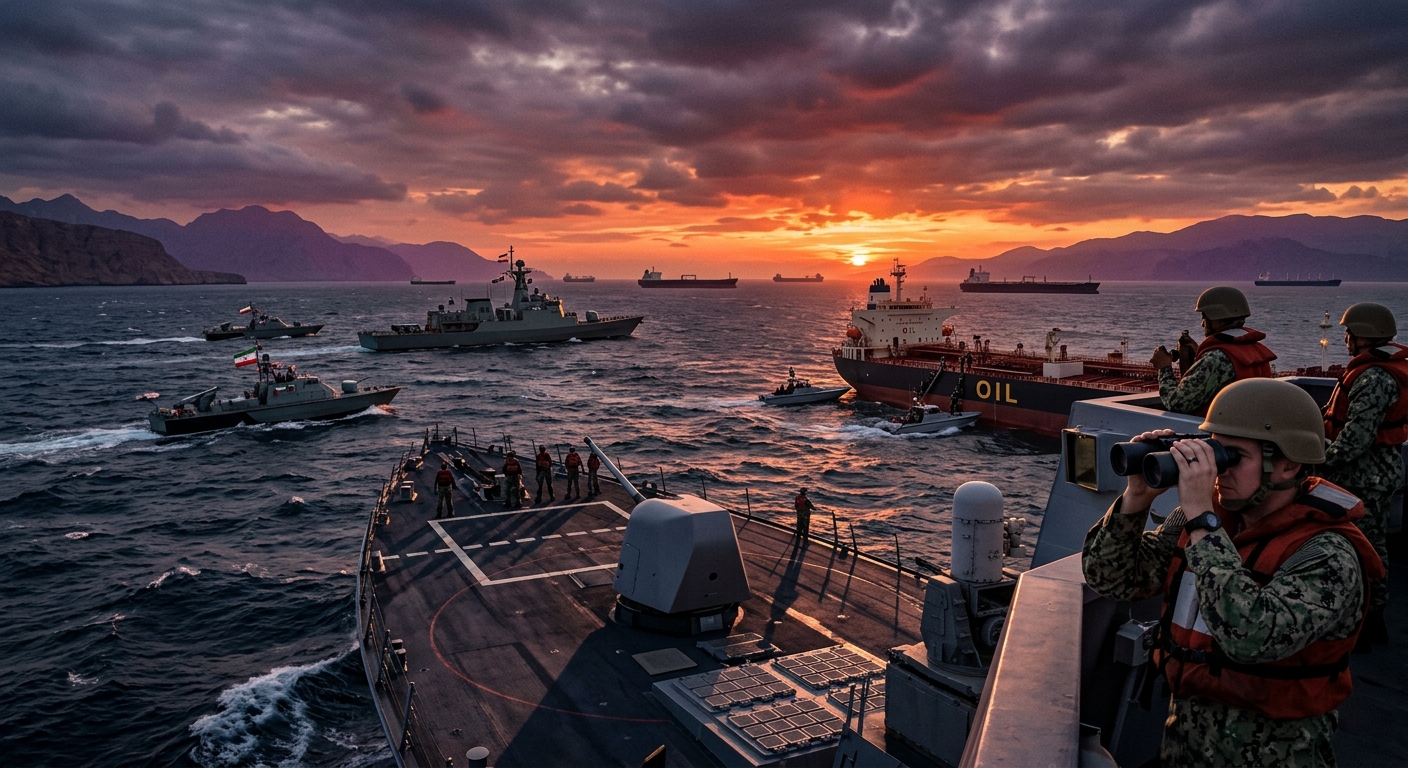
Summary of the Conflict
The conflict in the Strait of Hormuz has escalated significantly following Iranian attacks on commercial vessels and military actions, intensifying U.S.-Iran tensions. This vital waterway is crucial for global oil transit, with about 20% of the world’s oil supply passing through it. Iranian operations, such as mining the Strait and conducting missile strikes, have disrupted shipping and raised international security concerns, highlighting critical risks for global energy markets.
The United States has demanded that Iran renounce its hostile actions and maintain free navigation consistent with international laws. U.S. Central Command has executed strikes against Iranian military assets while advising commercial vessels to maintain safe distances from military actions to prevent escalation. Diplomatic efforts aim to de-escalate the situation, but Iran continues to assert sovereignty over the Strait and calls for joint administration with Oman, complicating international relations and security dynamics.
Understanding Iran’s Position
Iran’s claims over the Strait of Hormuz arise from a historical context of asserting control over this strategic passage. Tehran has issued threats to “close” the Strait, a narrative it has maintained for decades. Recent military actions indicate Iran’s readiness to enforce its maritime claims, including attacks on vessels it deems unauthorized and proposals for an administrative authority that would manage passage through the waterway.
Iran’s military strategies have effectively targeted commercial shipping, leveraging drone and missile capabilities. This has significant implications for global oil exports, compelling nations to reconsider their transit routes and positioning in the Gulf. Iranian leaders frame their actions as necessary self-defense against perceived U.S. aggression, further complicating peace-building efforts.
Regional and International Reactions
Responses to the Iranian attacks have included widespread condemnation from regional allies like the Gulf Cooperation Council (GCC), who emphasize the need for adherence to international maritime laws. This coalition is advocating for the uninterrupted operation of shipping lanes and has coordinated diplomatic efforts to mitigate the ongoing tensions. Discussions are noted among Gulf nations to formulate a response that includes enhancing security measures and potentially reinforcing the presence of U.S. allies in the region.
Iran maintains that its actions are justifiable defenses against U.S. military threats, asserting that any disruption caused would lead to retaliation. The U.S. along with its international partners has committed to maintaining maritime security, issuing advisories to commercial vessels, emphasizing risk reduction, and continuing diplomatic negotiations to stabilize the Strait.
Impact on Oil Markets and Global Trade
The ongoing conflict has significant repercussions for global energy markets, threatening safe passage through one of the world’s most critical shipping lanes. Recent disruptions have already affected oil shipments, leading to fluctuating prices that impact markets worldwide. Nations equipped to bypass the Strait may benefit economically, but those reliant on it for transit, such as Iraq and Qatar, face declines in revenue, raising concerns over long-term regional stability.
The conflict illustrates the fragile nature of maritime security, where business continuity hinges on geopolitical dynamics. Insurance premiums for vessels traversing the Strait have surged, highlighting the growing reluctance of commercial operators to navigate through high-risk areas. This illustrates a persistent challenge posed by Iran’s continuing military capabilities in the region.
Future Considerations and Geopolitical Strategy
The escalation in the Strait of Hormuz poses questions for U.S. foreign policy and its approach to maintaining stability in critical regions. Ongoing military posturing combined with diplomatic overtures reflects a dual strategy aimed at both deterrence and conflict resolution. U.S. naval authorities continue to advise caution for vessels operating in the region, urging compliance with security protocols to enhance navigation safety amid rising tensions.
The international community’s response is crucial in addressing both immediate threats and long-term maritime governance in the Strait. Balancing regional sovereignty claims alongside global shipping rights remains a complex challenge, requiring coordinated diplomatic and military strategies to rebuild confidence and restore safe passage through this vital waterway.
The content is provided by Harper Eastwood, 8 Minute Read